
This Christmas season, I have been thinking about stories, fasting, gifts and coffee.
“Because you rescued me.”
At the end of summer, we visited the beach. My 4-year-old was floating in a stream that flowed into the ocean. She wore floaties, even though it was just a foot deep.
Until it wasn’t. We hadn’t realized there was a cliff of sorts, about 5 feet deep, on one side.
And it was covered in razor-sharp shells.
She didn’t scream at the first cut. She screamed when the blades caught her floaties, holding her slightly down in the water.
I jumped in and swam over to free her. Of course, that meant that I got cut too. By the time I freed us, our feet, legs, hands and arms were bloody.
Our scars healed up after a month or so. But it was a traumatic moment.
It was also a defining moment. In my daughter’s mind, her dad had jumped in and rescued her from certain death.
She told everybody we met about it.
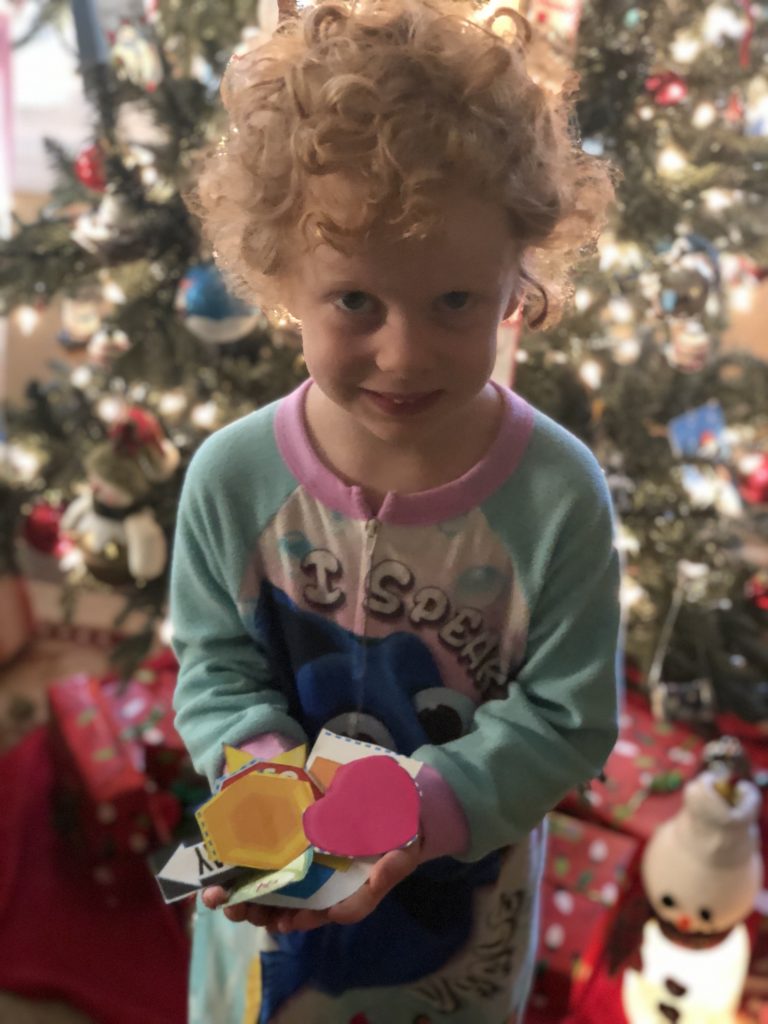
She made me gifts to celebrate it.
In the fall, she marched up and handed me these shapes she had cut out of an activity book.
“This is because you rescued me,” she said, matter-of-fact, and walked off again.
I didn’t realize she was still thinking about her “rescue story.”
But I think I know why. It’s because that story gave her clarity about who I am and who she is. I am her father, who will put her first. And she is loved.
Part of the story
This year I’ve worked with several clients helping them define their stories. In some cases, it is a company’s origin story. In other cases, it is a defining moment in an individual’s career.
If you pay attention to the story, you can tease out the moments of drama: Life-altering decisions that seem so small at the time. Habits that show someone’s real character. Hurdles to overcome, trials to endure.
It’s not just my clients. On a grander scale, the great cultures of the world have always revolved around story.
In the West, you weren’t truly educated unless you had absorbed the histories of Plutarch’s Lives, for instance, or the epics of Homer. They were part of the Great Conversation, the stories that defined who we were as a people.
Mythos and logos, Greek for, to put it simplistically, story and truth. Truth was the principle that ran the universe. And it was often embedded in stories, whether historical accounts or fictions.
That’s why the introduction to John’s Gospel must have been such a stunner. His Christmas story dares to say that the “Word [read: Logos] became flesh and dwelt among us.” The Truth, God himself, embedded himself in our story, as a character.
The main character. To rescue us.
What if you are not the main character in the story you are in?
The story’s not over
Last week, I completed a two-week fast.
I’d love to tell you that it was a religious fast born out of my devotion to God. But the reality is that I had my tonsils out. No hard foods or acidic drinks like coffee for two weeks.
You don’t know joy unless you have finished counting down the fast days that lead to a feast.
That first day, I had bacon, coffee, Pepsi, tater tots, onions rings, a Philly cheesesteak, cookies and pizza.
It was glorious.
God was winking at me: The end to my fast fell during the week of Gaudete Sunday, the next-to-last week of Advent.
The church has observed the Advent season since at least the 600s. The word comes from the Latin for “coming.” It is a worshipful remembrance of Jesus coming to earth as a baby. And it is a hopeful expectation that he is coming again to take us home.
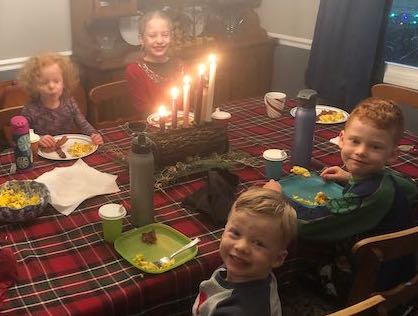
Originally the church observed Advent with a fast. Eventually, the church added a tradition of lighting a new candle for each of the four Sundays before Christmas.
They are usually somber (and royal) purple candles. But the next to the last one is pink. The fast is almost over. The wait for Christmas is almost over. And the wait for Christ’s return is closer than ever.
So we rejoice–Gaudete is the Latin command to rejoice.
Perhaps you don’t fast before Christmas. And maybe the excruciating anticipation of opening presents has worn off.
But I dare say every one reading this has something in their story that they would like to see resolved.
So many clients through the pandemic have related difficult stories: family tension, struggles with depression, health scares, financial worry.
In many cases, people have expressed to me that they are just absolutely burned out.
But the story is not over.
Coffee
What were the wise men’s stories before they saw a sign in the stars? It is one thing to believe you know a King of the Jews has been born. It is quite another thing to decide to make a journey to a foreign land to worship this King.
What might they have been struggling with, what might they have anticipated, that they saw all their effort worth it?

When their wait was finally over, when they came to Jesus, they “rejoiced” … “bowed down” in worship … and gave him precious gifts.
Myrrh. An expensive gift: It surely funded Mary and Joseph’s family as they escaped to Egypt. But it was also a prophetic gift: John’s Gospel records that Jesus’s corpse was embalmed with myrrh after his crucifixion.
Perhaps there was an additional reason for myrrh. It was part of the recipe for the anointing oil Moses was to use to sanctify things.
I don’t have a better word for it. I know “sanctify” is a church word, but how else do you describe it? The closest I can get is good coffee.
Baristas will tell you that it’s the oil in the coffee that makes it so good. They wait until making your drink to grind coffee beans so that you taste maximum flavor and smell maximum scent.
You can’t really get rid of the coffee smell easily, can you? It’s on your clothes even when you leave. It’s in the air long after the beans are gone.
Christ, or in Hebrew, Messiah means “the Anointed One.” There were many messiahs: Jews would anoint their priests and kings with oil to set them apart, to sanctify them for their role.
But can you imagine how those oils lingered on the body? How they changed the very air for a while? You can’t see it, but you know it’s there. Things are changed.
Perhaps that is why Jesus is the Messiah. He was anointed at his baptism with the Holy Spirit. He was set apart for his rescue mission, the one that only he could perform.
That anointing happened at his baptism, when John the Baptist said, “Behold the Lamb of God, who takes away the sins of the world.”
Lambs were meek animals, sacrificed for sins.
Rejoice is a command
Like my 4-year-old, my heart is in desperate need of rescue. Only God could rescue me. And it was a rescue mission that cost God in blood.
Here I am, in the middle of that rescue story, anticipating its ending, when Christ comes again.
What gifts do I bring the Main Character?
Am I living in anticipation of his return? Do I honor the command in “Joy to the World” to “let every heart prepare him room?”
Do I recognize an anointing on my life–a mission, a consequence?
I am going to invite you to do a Hard Thing. Consider that you are in Someone Else’s story. A story in which that Someone rescues you. And a story in which you can respond by rejoicing.
I am going to savor smelling my coffee this morning.
Merry Christmas.