
“No soup for you!”
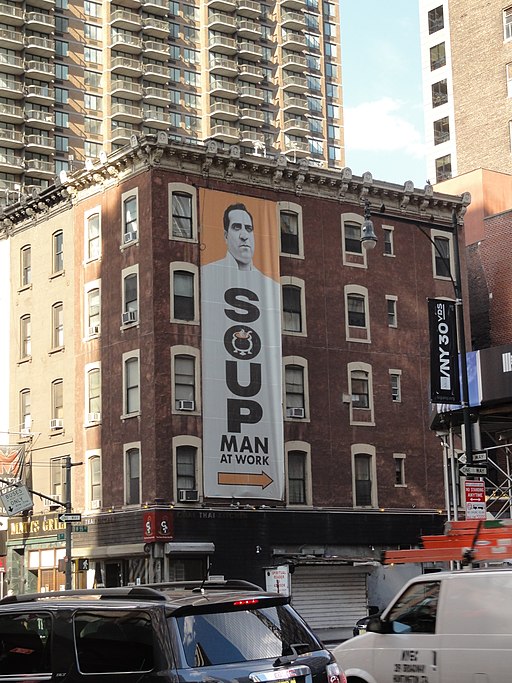
The Soup Nazi got away with saying that in the classic Seinfeld episode because the soup was just that good.
Customers were fawning and falling over themselves to obey the rules and buy soup.
I have seen a Soup Nazi approach tried in the real world … but it turns out customers do not fawn over a product or service when disrespected.
An example: One of my clients switched its enterprise software. Their old system was OK, but the sales rep wasn’t very responsive. He seemed to assume my client would always want his product.
… Until a startup enterprise system came on the scene. My client made the decision to switch and called to tell the sales rep.
He exploded in disbelief: “Are you crazy? Those guys are terrible! They have no idea what they’re doing! You’ll be back in a year!”
My client may not stick with the new system. But I can tell you which system will NOT be on a future shopping list.
“You are loved.”
Another example: In the 2000s, I approached the counter of a snooty coffee shop wearing khakis and a polo. The barista looked at my squaresville business casual and audibly scoffed before taking my order.
I never went back.
I wasn’t the only one to roll eyes at the hipster vibe there: The shop had a reputation. It later went out of business. A new owner turned it into a chain, decidedly down-market.
(I assume with new baristas.)
But some coffee shops love their customers. Take Purdy’s in Richmond, Ky.
I can’t say enough about how Purdy’s is the total package: The coffee is great, the atmosphere is perfect and the employees are, to a person, phenomenal.
People–both customers and employees–are the emphasis.
As a result, Purdy’s has a reputation too. When the pandemic shutdowns hit, Purdy’s could only keep open its drive-through.
It had a constant line of customers.
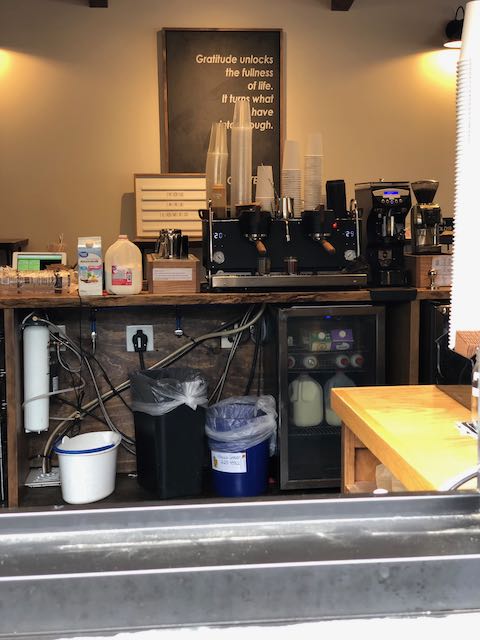
I snapped the accompanying picture when I first went through that drive-through line. Notice the sign positioned for all of us customers to see. (In case you can’t make it out: “You are loved.”)
Service, not snobbery, has customers continuing to fall over themselves to enjoy its coffee.
What’s the secret?
I don’t think Purdy’s set out to be the elite choice for coffee in my area. I think that was an outgrowth of (at least) two secrets.
Caring for the customer trumps beating the competition. Don’t worry about being incrementally faster, cheaper, better. If you really care about the customer, you will figure out how to make your product or service just what your market needs.
I have seen this happen in automotive countless times. The high-volume store in town is a “one and done.” That is, they can lure a customer in with low prices, but the customer treatment is so poor that after one car, the customer is done. (The dealership gets away with it for a while because there are so many other customers they haven’t burned yet.)
But what happens, eventually, is that the store down the street, the one that takes care of the customer, has a better reputation. Sometimes the underdog becomes more profitable. And sometimes, I’m happy to say, the underdog becomes no. 1 in the state.
Notice that this philosophy does NOT mean doing whatever the customer wants. To quote Steve Jobs:
Some people say, “Give the customers what they want.” But that’s not my approach. Our job is to figure out what they’re going to want before they do. I think Henry Ford once said, “If I’d asked customers what they wanted, they would have told me, ‘A faster horse!'” People don’t know what they want until you show it to them. That’s why I never rely on market research. Our task is to read things that are not yet on the page.

“Things not yet on the page.” I take that to mean anticipating customers’ wants and needs even when they are not verbalized, even when they are not consciously known to the customer.
My barbershop is a good example. They have made a point to ensure every chair has a good barber in it (pretty logical) and that they are able to take payment for each other.
I did not know I needed this in my life. Now, when I come in with my two boys, we can each go to different chairs, I can trust that each of us will get a good cut, and I can pay one of the barbers who will split the pay with the other two. I’m in and out, and we have good haircuts.
Offer the customer entry into the club. This is another area where Purdy’s excels. I was a happy customer who did not know a ton about coffee. I just knew I liked what they made.
But one morning, after a few questions from me, the barista offered to show me how to make a pour-over. In the process, I learned more about how coffee can taste so good. I also learned how well Purdy’s excelled at it!
I wasn’t intimidated, and I didn’t have any preconceived notions about coffee. But a simple invitation from the employee led to me valuing the Purdy’s brand even more. And oh by the way I bought a lot more pour-overs.
Such customer initiations can show up in so many opportunities. The introduction to the menu at a restaurant. The tour of the dealership upon purchase of a car. The polite explanation of how to pronounce names of models.
It could include signage, the website, videos on social media.
Heck, it could be a literal club, too.
The real motivation happens to be the same as the first secret: care for the customer.
If you really want what’s best for the customer, it will guide your decisions and your employee behavior.
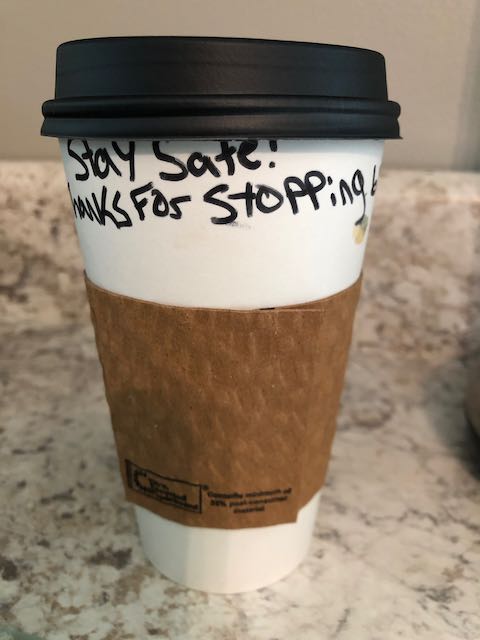
It’s why an employee put this message on that first cup of coffee during the pandemic.
How could you prioritize taking care of the customer in your thinking and research?
How could you invite them to join your club?
I hope you can strategize with your team soon.