
The Wall Street Journal says people are stressed about returning to work.
We were also stressed about the pandemic. And about working from home.
There’s just a lot of stress out there, I guess.
And Stanford psychologist Kelly McGonigal says that can be a good thing.
Wired to protect
A few years back I was talking to someone at a farmers market.
I heard the blood-curdling scream of an older woman.
My entire body went on high alert. There was movement out of the corner of my eye.
I ran two steps over to the curb and scooped up a little girl who had run away from her grandmother.
The next second, a car went by. She would have been crushed.
Am I a hero? No. I just had adrenaline and cortisol jacked through my brain. It gave me amazing focus.
You could say that “fight-or-flight” response to threats is how God made ya. It allows us to protect ourselves and others.
Perception is reality
Every college student learns, in their one required health class, that eustress is good stress, distress is bad stress.
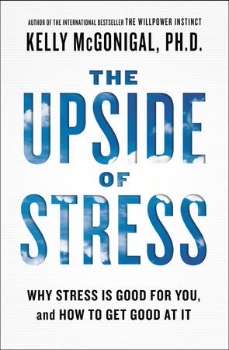
McGonigal argues in “The Upside of Stress,” what if the difference between eustress and distress is your mindset?
People living or working in an environment they see as toxic—filled with threats or abuse—have higher rates of heart disease and so on. “Fight-or-flight,” long term, isn’t good for you.
But what if you saw threats as challenges? Instead of forcing yourself to get calm, let your body’s reaction to stress provide you with the focus and energy to rise to the challenge.
What if you moved from “fight-or-flight” to “tend-and-befriend?” You may not have a child running into the street to save, but you do have opportunities to help, even in small ways, those around you. And doing so activates systems in your brain that make you more social, brave and smart.
What if you recognized these stressful challenges as the opportunity to grow? How many hard seasons do we look back on in gratitude for what it taught us or how it shaped us?
The book suggests you set a stress goal for the year and embrace the growth, learning, connection and meaning that come from it.
Applying the book
I learned that a famous big box retailer has new hires read “The Upside of Stress.”
A physician assistant I know remarked, “They’re just grooming you to accept stress as your norm.”
He has a point. (And he’s not alone.) So here are some suggestions for applying the ideas in the book appropriately.
Employers:
- If your people are asking for help, and all you provide are classes to help them manage their emotions, they could feel you aren’t hearing them. Address their concerns.
- Recognize you are under stress. For example, my clients can’t find new hires. Or the hires quit after, literally, one day of work. I recently heard about a short-staffed hotel’s general manager changing beds. (No boss should be above doing the work of direct reports … but when will he manage, serve and develop his people?)
- See your stress as a challenge. One of my most successful clients set record after record in the pandemic. Multiple managers there told me, “We decided to say ‘pass’ to the shutdown.” The Wall Street Journal article above features a video about employers taking the opportunity of the shutdown to reimagine workspaces. How can your stress lead to growth?
Employees:
- How could you see stress in your life as a challenge to help you grow?
- Are you in an unhealthy situation–toxic or threatening? I once had a client with a manager who realized that, for his own good, he needed to leave the employer. He did so, and it was a life-changing improvement for him. It was also a growth moment for the company. Maybe your challenge is how to leave.
- Pause to remember what you are thankful for from the pandemic. So many clients have mentioned that, while awful, the shutdown gave them time with their family that they will never get again. Or a chance to reprioritize. Or to spend unexpected time on something important.
If any of this is hazy for you, a coach can help you see it clearly and decide on action to address it.
Commanded to rejoice in suffering
One more note, this time to Christians:
Hip Socket’s motto is Wrestle and Grow. Both name and motto are biblical allusions to being uncomfortable and suffering. As St. Paul says:
Not only that, but we rejoice in our sufferings, knowing that suffering produces endurance, and endurance produces character, and character produces hope, and hope does not put us to shame, because God’s love has been poured into our hearts through the Holy Spirit who has been given to us.
Romans 5:3-5