

“One, one, two, three, five … eureka!”
Thanks to a parrot saying that in the series Mathnet on Square One Television, I will always remember the Fibonacci sequence.
Growing problems
I know there are maybe three of you left who remember that show.
But you don’t really need to understand Fibonacci to profit from this Les McKeown article: “The Fibonacci Sequence of People Management.” It’s an important read for anybody overseeing an organization that is growing.
If you’d like a real-world example of the article’s principles, check out this story with the provocative title, “The Elves Leave Middle Earth–Sodas Are No Longer Free.”
Growth brings with it important advantages and critical challenges. A classic example would be the early Church of the New Testament. I’ve mentioned it before–interestingly enough with another Les McKeown article.
Two solutions
I see two activities crucial for leadership in times of growth:
Name your culture. As you grow, you won’t be able to oversee whether something looks and feels and acts like what your organization is about. To help others get that vision, so they can oversee in their own ways, you’ll need to name what it looks like.
Naming the things in our world is a primordial activity of mankind. And, I would argue, it’s a divine purpose. Your ability to describe how we do things around here, to explain what it looks like to be a part of your culture, can make or break your ability to sustain that culture.
Years ago I did some work for Porsche. There was a small problem at one event, and I brushed it off, saying I would adapt and overcome.
But the employees present were adamant that they needed to address the one small problem.
“It’s not very Porsche,” they explained to me. Wouldn’t you like your people to be able to respond like that about threats to your culture?
Keep aware of group dynamics. The bigger your organization grows, the more you lose the luxury of assuming everyone understood your intentions The reality is you never had that luxury … but now misperceptions are magnified.
The New Testament Church in my article linked above is a great example of that. The Apostles knew they needed to be focusing on preaching and teaching, but they also knew they had to address a concern that a charitable program for widows favored Jews over Greeks.
So notice the several steps they took to address this looming problem:
- They spoke to the entire congregation. The “telephone game” would not impact how people heard the message.
- They clarified their role. Grumblers could not say the apostles were not doing their job.
- They suggested the church deputize seven spiritually wise men of good reputation to distribute food to widows. The church making the choices encouraged them to support the men, and the men’s roles ensured fairness.
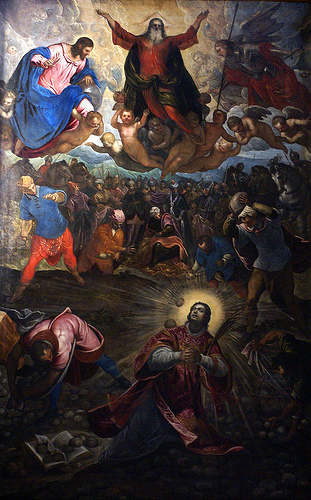
It’s interesting to note that shortly after this even, one of the seven men, Stephen, became the first martyr of the Christian Church. Enemies of the Church arrested him on trumped-up charges and hauled him before the council. In his finest hour, he gave testimony, explaining the good news (“gospel”) that the church had at its cultural foundation. And they stoned him to death for it.
You aren’t Jesus, and your organization probably isn’t the Church. But wouldn’t you like your people–even the ones 10 levels down from you–to know the culture so well that they could honor it in moments of crisis?
I hope this helps you grow. Which do you find harder? Naming the culture or paying attention to the dynamics?