
I’m still reading Alexis de Tocqueville. And I’m still blown away by how accurately his “Democracy in America” calls out what makes America great–and what someday might be our Achilles heel.
Today’s post is just to remind Americans that we have some distinct qualities, things that rightly make us proud. Such as:
cutting costs.
Stay with me!
There is no better way to express my thought than to say there is something heroic in how Americans do business.
Tocqueville sets up this compliment by reminding the reader of France’s greatness during the French Revolutionary Wars. He speaks of Napoleon’s use of corps-sized formations.
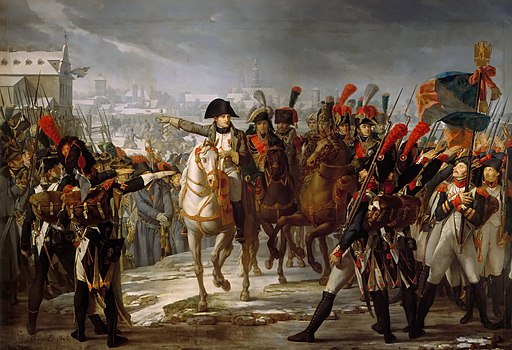
These were the first combined-arms groupings of divisions, allowing artillery, cavalry and infantry to go for the jugular without risking the army’s supply and communication lines. Tocqueville notes the tactic “confused older generals and nearly destroyed the most venerable monarchies in Europe.” It required asking new things of soldiers and going without what had been seen as indispensable:
The French were not as numerous or as wealthy as their enemies and had far fewer resources. Yet they were constantly victorious. …
The Americans have achieved something similar in commerce. What the French did for victory, they do to cut costs.
Then he gives a contrast that I have to let you read in full. America has bee so different that we perhaps don’t even realize it could be another way:
The European navigator is cautious about venturing onto the high seas. He sets sail only when the weather is inviting. If an unforeseen event occurs, he returns to port. At night he partly furls his sails, and when the ocean turns white with the approach of land, he slows his course and checks the sun.
The American neglects these cautions and braves these dangers. He sets sail while the storm still rages; by night as well as day he spreads his full canvas to the wind; he repairs his storm-damaged ship while still under way; and when at last he comes to the end of his voyage, he continues to make for the coast at full speed as if he already had his port in sight.
The American often ends in shipwreck, yet no one else plies the seas as rapidly as he does. By doing what others do in less time, he cuts his costs.
So we are more willing to take risks. But there is more:
Before reaching the end of a lengthy voyage, the European navigator feels that he must put in at several ports along his route. He wastes precious time searching for ports of call or waiting for opportunities to leave them, and he pays every day for the privilege of staying.
The American navigator sets sail from Boston to buy tea in China. He lands in Canton, stays there a few days, and returns. In under two years he has traveled the circumference of the globe and seen land only once. During a crossing of eight to ten months, he has drunk brackish water and lived on salted meat. He has battled constantly with the sea, with disease, and with boredom. But upon his return, he can sell his tea for a penny a pound less than the English merchant: his goal has been achieved.
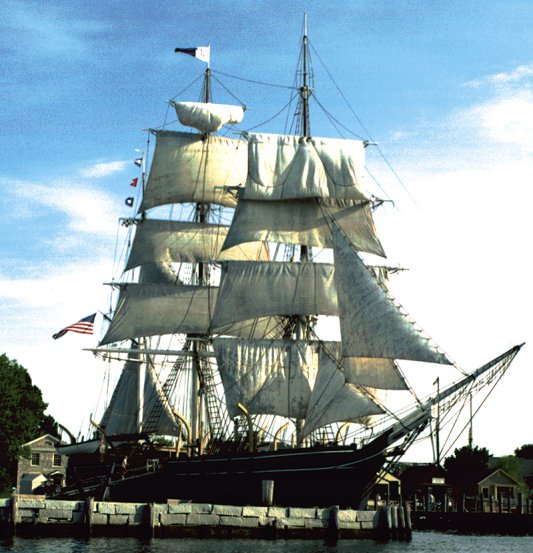
Not only are we risk-takers, but we are willing to make sacrifices to achieve our goals. We endure things to achieve speed. (“Moby-Dick” would eventually capture the spirit of this, for better or for worse.)
Tocqueville says all that to say this:
There is no better way to express my thought than to say there is something heroic in how Americans do business.
When I read this, my cautious nature reminds me that there are dangers present in our strength. You might have a shipwreck, die of disease, etc.
And the goal may not be worth the cost.
But if it is … may you proudly embrace what today we might call the hustle and grind.