
There is a way of looking at the world that can severely hamper your ability to successfully navigate work life, let alone life. Its opposite can unlock new levels of not only success but fulfillment.
Let me illustrate with a couple of word pictures, one true, one fairy.
“What do you mean you can’t sleep?”
Last spring, my eldest got up almost as soon as we put the kids to bed.
“What is it?” I said, with–I’m going to be honest with you here–little patience in my voice.
“I can’t sleep,” she said.
Being the certified coach that I am, you can imagine my next move.
Well, maybe not:
“Think about what you want to get your family for Christmas,” I snapped. “Now go back to bed.”
Some advice, a command, the end. I was impatient to get back to talking to my wife and watching a TV show.
Within a half hour, she came back out. And finally my dad gene kicked in.
I really looked at her this time. She was trying to mask a troubled face.
“Honey, what do you mean you can’t sleep?” I asked.
“I keep thinking about that watch commercial,” she said.
The penny dropped. I had been with her when she had seen the commercial. It is eery. So eery, in fact, that Apple took the commercial down, as you can see below. The gist: As the camera pans through a forest, we hear a person’s Apple Watch tell an emergency service that the watch’s owner has had a bad fall and is not responding.
[UPDATE: Since posting this article, Apple has taken down the ad–see the link below. Perhaps leadership realized fear-based marketing was, at the least, off-brand for Apple.]
I became intentional, giving her space to pour out her heart.
“Why did that commercial bother you?” I asked.
She ran into my arms crying: “I’m afraid I’m going to die!”
The next 60 seconds were precious time holding my daughter that I wouldn’t give up for the world. As she got her sobs under control, I told her we loved her, that we were glad she told us her feelings. I reminded her of a Bible verse she had memorized (Isaiah 41:10) that promised God wouldn’t leave her.
But mostly, I just held her.
Was there a big conversation afterward? Mental gymnastics I had to prepare for?
No. She looked up with a smile, kissed me on the cheek, kissed her mother on the cheek and then went to bed. Without a word.
“You have undone the enchantment …”

That was a story in the real world.
Here’s one from Arthurian legend, although it is much older than that. (It is a version of the loathly lady tale, this one summarized by Roger Lancelyn Green, a member of Tolkien and Lewis’s Inklings.)
King Arthur’s nephew, Sir Gawain, offers to marry Lady Ragnell, an ugly hag who knows the answer to a riddle that would save Arthur’s life.
The riddle: What do women desire most in the world?
The hag’s answer: To rule over men.
The answer saves Arthur’s life, and Gawain is true to his word. He marries Lady Ragnell. At the wedding feast, the hag is a monstrous embarrassment, hideous to look at, “guzzling and slobbering” over her meal. And then it was time to retire to the bedchamber.
At the hag’s request, Gawain dutifully kisses her, and cannot help recoiling and turning in horror. When he turns back around, in place of the hag is a beautiful woman.
Lady Ragnell explains that she had been cursed. Thanks to Gawain’s kindness, she will now be transformed into a hag for only half of the day.
Would he prefer a hag by day or a hag by night?
“Bethink you also what you must endure,” she explains, urging him to carefully make his decision.
But Gawain is on another level. He says to forget about him: Think about what she must endure! He leaves the choice with her. He lets her “rule over” him: What would she want?
In leaving the choice with her, the curse is fully broken. Gawain marries a full-time beauty, and they live happily ever after.
(Well, kind of. Fairy tales are full of suffering, but the next part of their story is beyond our scope here.)
Managers can be Marxist
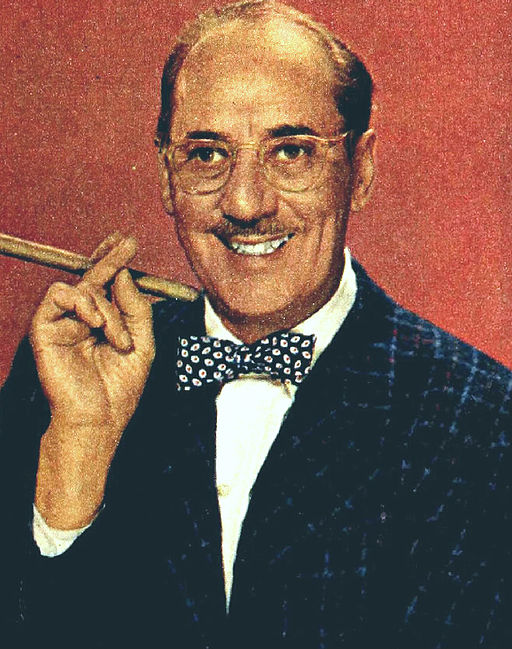
“Workers of the world, unite!” cried Karl Marx. But managers and capitalists have operated with his assumptions, too.
Some corporate cultures operate from a Marxist mindset: Resources are scarce. We use power to force what we want in this world.
The power could be resources. Access. Money. Knowledge (don’t we say knowledge is power?). Time.
People are pawns. At best, managers manipulate the levers of power to get people to do what management needs. At worst, managers manipulate the pawns themselves.
And pawns manipulate too. You don’t have to be workers of the world, uniting for a strike. Plenty of power is wielded in the ranks. It could be consciously slacking off, infighting, cliques, even gatekeeping.
If you don’t believe me on gatekeeping, ask any vendor who he or she tries to get to know early on in the relationship with a company. (Answer: the receptionist, or the boss’s secretary.)
We have all been guilty of this kind of thinking. I wanted to say the right words so my daughter would give up and let me enjoy a kid-free night. Sir Gawain could have made his decision based on what was best for him.
You might have looked at your team as objects to help you get what you want.
The alternative, of course, is love.
“I will show you a still more excellent way.”
The secret to Gawain’s success, to my special moment with my daughter, is to put others first.
In his first letter to the Corinthians, St. Paul spends quite a bit of ink describing the spiritual gifts and their proper use. I suppose those gifts could be seen as power. If you were playing Dungeons & Dragons, each character’s spiritual gift would give him a bonus to dice rolls.
I’d like to acknowledge that I just put references to the Bible and to Dungeons & Dragons in the same paragraph. Regardless, the D&D character’s gift would give them more power over outcomes.
If you saw the person sitting across from you as an eternal soul created by God … it would impact how you interacted with them, wouldn’t it?
But Paul ends the section on spiritual gifts by saying that the power isn’t what is important: “I will show you a still more excellent way.”
That is the introduction to the famous Love Chapter, often read at weddings. It is a description of selflessness. Putting others first.
And it makes a bold declaration, the very contrary to Marx: This material world will some day pass away. But love will not.
I suppose the reason is that love has to do with the connection between two eternal things: one soul to another.
If you saw the person sitting across from you at the boardroom, at the break table, as an eternal soul created by God … it would impact how you interacted with them, wouldn’t it?
We love the concept of dignity at Hip Socket. It cures a lot of ills. One of the reasons honoring dignity works is because we pull back from the materialist view–that what we experience with our five senses is all there is–to a transcendent view.
We have souls. There are bigger achievements than who makes the most money or sells the most widgets.
If you offered me $1 million to skip that night with my daughter, it would be an easy decision. I know I impacted her soul that night. God and I will talk about that some day. I doubt we’ll talk about how much money I made, or when I was promoted, or how many times I went viral.
You are no different. Today you are going to interact with a teammate who needs you to put them first.
“Can we take some time to do this in reverse?”
One more story to close: I recently led a workshop for the management team of a small business. The owners had been intentional in defining the company’s mission and values. The statements mainly discuss a desire to care for and bless: the staff … the people the business comes in contact with … the community at large.
Honoring those statements has made the company rabidly successful. Customers went out of their way to ensure it made it through the lockdowns. The workshop was to discuss ways staff could further honor the mission and values.
During the breakout, one of the owners pulled me aside:
“This is great, we are getting lots of ideas out of our managers on how they and the staff can treat each other and customers. But can we take some time to do this in reverse? I want to know what we, the owners, can do to better honor the values with them.”
It was a daring request.
I have worked with clients where managers would have said, “It’s all rainbows, you’re great owners!” And I’ve worked with clients where managers would have clammed up. Either way, it’s too risky to get real.
This was different. It took some time, but the managers started pouring out ideas on how the store could improve. Even if some of the suggestions were part-critique, they were given–and received–assuming the best of intentions.
The theme: They really loved each other, their customers and their community. And they really wanted the privilege of continuing to do that.
May all your interactions today come from a place of love. May your team and customers see that you truly care.