
Hip Socket readers, we need your help.
A client has asked for a document listing “word tracks” for the best way to speak with customers of each DISC style. We’d like to turn that request into a handout and possibly a podcast episode for our DISC resources page.
Please comment on this post answering the question:
What words or phrases do you use with customers, and which DISC style best resonates with it?
Before I suggest some, let me share two assumptions:
- A danger with DISC is that you use your knowledge of it to manipulate people. Don’t do that. It’s unethical. And, eventually, customers will realize what you are doing. Remember the old adage, “People love to buy, but they hate being sold.”
- The opposite is also true: Adapting your language and style to a customer’s preferences is a loving thing to do. Yes, I use the word “love.” You are serving your client by making sure they tell you what they really want and need. By making sure they understand what you are sharing with them. By making sure they are assisted in their decision.
And now, some suggestions, categorized by the four styles. There are obvious places of overlap between the styles, so you might borrow from two or three lists when addressing a particular client.
Please share your ideas in the comments!
Dominant
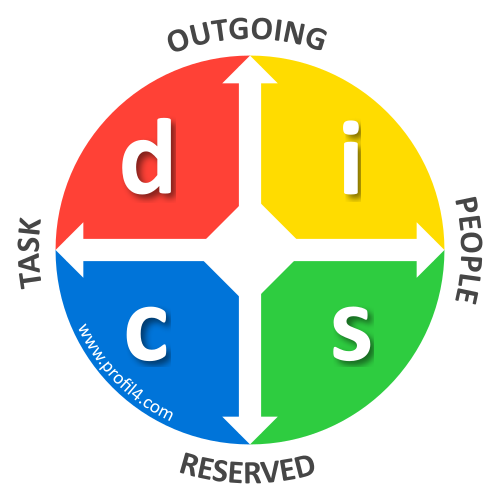
The D style values action and challenging the world around them. They can be seen as fast-paced, outspoken, questioning and skeptical. Comfortable exercising control and maintaining distance from others, they might see the world through the lens of power. “What” is an important word to them. They can be task-oriented do-ers.
Suggested phrases:
- What do you want to accomplish today?
- (Avoid small talk.)
- So I don’t waste your time, what is most important to you?
- What is your timetable?
- The practical results you will experience with this product/service are …
- How would you like to proceed?
- I will make sure the process is quick and easy.
Influential
The I style values action and collaborating with the world around them. They can be seen as fast-paced, outspoken, accepting and warm. Comfortable exercising control and being involved with others, they might see the world through the lens of people. “Who” is an important word to them.
- (Make small talk, such as:) Tell me about yourself. … Let me tell you some about me. …
- Who is going to use this product/service? What is important to them?
- I personally am excited about this product/service because. …
- This product/service will impact those around you by …
- You mentioned your situation involves [xxxx]. A feature that addresses that is …
- What option feels right to you?
- I will get started on this immediately.
Steady
The S style values stability and collaborating with the world around them. They can be seen as cautious, reflective, accepting and warm. Comfortable adapting to the world around them and being involved with others, they might see the world through the lens of pace. “How” is an important word to them, and they may seem more moderately paced than Ds and Is.
- (Make small talk–perhaps more than with any other style.)
- I want to be as careful as I can in understanding your needs and concerns.
- Let me explain our process …
- How do you plan to use the product/service? (Use lots of follow-up questions, reflecting back the answers you think you hear to verify you understand.)
- My goal is to look out for your best interests.
- This product/service has some features you can really depend on …
- Most people choose this option because …
- What else would you like to know to feel comfortable with your decision?
- I will be here for every step of the sales process to help you.
Conscientious
The C style values stability and challenging the world around them. They can be seen as cautious, reflective, questioning and skeptical. Comfortable adapting to others (or at least working to stabilize the world around them) yet maintaining distance, they might see the world through the lens of policy–or facts. “Why” is an important word to them.
- (Avoid small talk.)
- How can I help you with your research?
- I want to be as thorough as possible in answering your questions.
- Let me demonstrate the quality of the product/service for you …
- Here is why that feature is high-quality: The research shows …
- The expert opinion (or third-party research) is …
- What else do you need to know so you can make an informed decision?