
Increased tardiness and sick days. Inability to collaborate or embrace a change.
Doing the bare minimum or saying, “That’s not my job.”
Meetings that constantly become complaint sessions.
Increased turnover and decreased productivity.
Surveys continue to show that only a small percentage of the workforce is actually engaged in their work. There is a simple-to-explain, hard-to-master skill that addresses the employee engagement problem in three powerful ways.
You’ll need a little history first.
Three classics to describe the workplace
“Quiet quitting.” It’s also called “quitting in place” and—at least when I started in employee engagement work—“quitting but still getting a paycheck.”
Whatever you call it, they are new terms for an old trend.
As this LA Times article points out, the United States has a long history of employees deciding to back off of work.

My fellow members of Generation X (you know, the ones called Slackers?) will immediately think of “Office Space,” a workplace comedy from the genius who brought us King of the Hill. (Yes, both are classics.)
If your boss ignores what you say … if your employer disregards your situation … if you feel treated like a cog in a wheel, a number not a name, a means to an end … you might join the film’s protagonist’s declaration:
“I don’t like my job, and I don’t think I’ll go anymore.”
His girlfriend asks, “So you’re gonna quit?”
“Huh-uh,” he says. “Not really. I’m just gonna stop going.”
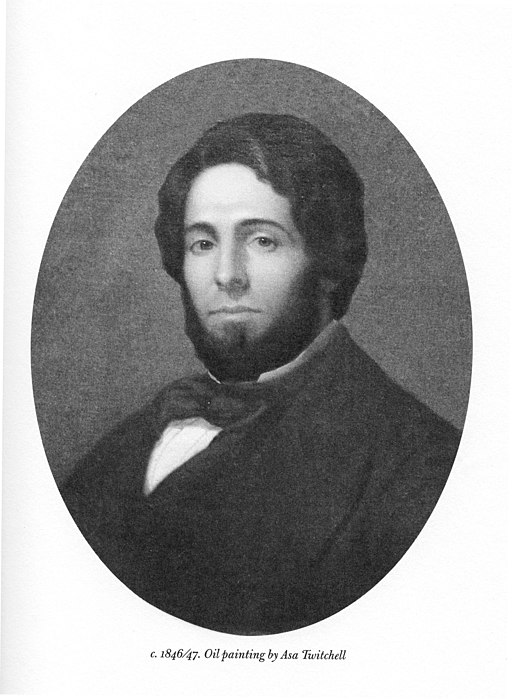
But yes, it’s even older than that: The article also points out that, in 1853, Herman Melville first published “Bartleby, the Scrivener: A Story of Wall Street.”
A comedic tragedy set squarely in the financial sector, the main character begins responding to his office’s directions and requests with, “I would prefer not to.”
It is, perhaps, an early indictment of American workplaces in the Industrial Age.
Twenty years before Melville published it, the French aristocrat Alexis de Tocqueville published something else. It was an assessment of American democracy. He perceived that America’s democratic liberty was morally right and the way the world was headed.
But … the resulting “equality of conditions” gave everyone an insatiable desire to rise in their situation. Americans were perfecting “industrial science,” making goods cheaper and faster thanks to workers specializing in one particular role on a product and thanks to larger-scale operations.
In other words, mass production. Which, he noticed, had a downside:
Before long, the worker has no need of anything but physical strength without intelligence; the master needs science, and almost genius, in order to succeed. One comes more and more to resemble the administrator of a vast empire, and the other to resemble a brute.
But brutes, those worker bees, have souls. Like their masters, they are striving, restless, never satisfied.
Something will have to break through what seems like meaningless work and give them something besides a paycheck.
That something starts with conversation.
Three benefits of conversation
When I was a teenager, someone shared with me the analogy of a game of catch to describe conversation. I throw something to you—a question, perhaps. You throw back an answer, with perhaps a follow-up question. Back and forth we go. This is at least the start of conversation.
The reason an employee is not engaged could have nothing to do with his or her employer. Not everything is about you, after all.
But conversation is one sure-fire way to uncover what is going on and address it.
Conversation leads to discovery. When I stop to hear from you, I might learn all sorts of things.
Employees’ concerns—things I need to address so they don’t become bigger issues.
Employees’ observations—things at the front line leaders can’t see due to their natural insulation.
Employees’ solutions—things that would make all of our lives easier and keep management from having to solve all the problems.
Sure, it might be opening a can of worms to ask employees, “What’s on your mind?” But is the alternative—something festering—any better?
And the action you take as a result removes an obstacle to engagement … and enables the second benefit:
Conversation leads to people feeling valued. If feels good to be heard. Employees notice when managers take the time to talk. When managers invest in remembering and following up on situations. Or even when managers ask for the employee perspective.
Notice that I’m not talking about a formal employee focus group or employee engagement survey. (Although I’d be happy for you to pay me to do that for you.) I’m just talking about talking.
Conversation leads to people knowing you are human, too. A colleague of mine talks about “opening the kimono.” Real conversation is that back-and-forth catch mentioned earlier. It is, in other words, both sides sharing. When you (appropriately) share your concerns and joys—yes, even some of a more personal nature—employees know two things: That you are human. And that you don’t think you are above them.
How do you do this?
All of this comes naturally to some of us. If you are wondering how to grow in having such conversations, here are some resources.
-Seven great coaching questions and how to use them (start with this episode)
–Eight ways to ask a question well
-Three things you need: trustworthiness, care and commitment (start with this episode)
The Hip Socket Resources page continues to grow as well. Check it out for even more.
All of these thoughts revolve around our purpose here at Hip Socket, to “wrestle and grow.” Only when we wrestle in conversation do we arrive at the truth of a topic together.
The nightmare is that you do nothing.
That you avoid the conversation. That you—perhaps with the best of intentions—leave the person alone.
And they eventually leave you. But “keep getting a paycheck.”
It’s better to have an awkward conversation than to have regrets. Good luck as you wrestle and grow with your people.