
As mentioned in the first post in this series on AR, VR and the metaverse, young Mark Ramsay loved cyberpunk novels.
Introduction to cyberpunk
Perhaps your thoughts range from, “Really, Ramsay? Who cares?” to, “Why study cyberpunk novels and films?” Here’s why.
They are entertaining.
The genre’s greatest voice, William Gibson, has novels that read like modern-day Raymond Chandler, thrilling page-turners—except they are about hackers, not private eyes. (Maybe they are the same thing. “Bladerunner,” based on Philip K. Dick’s “Do Androids Dream of Electric Sheep?,” is about a clever bounty hunter.)
They are influential.
Gibson’s 1984 debut, “Neuromancer,” popularized the term “cyberspace,” describing a world where people “jack in” to the matrix (cyberspace in a VR format). The concept crept into literature and film (e.g., the Matrix Trilogy). And music. For example, U2 put a jacked-in man in the liner art to Zooropa, heavily inspired by Gibson.
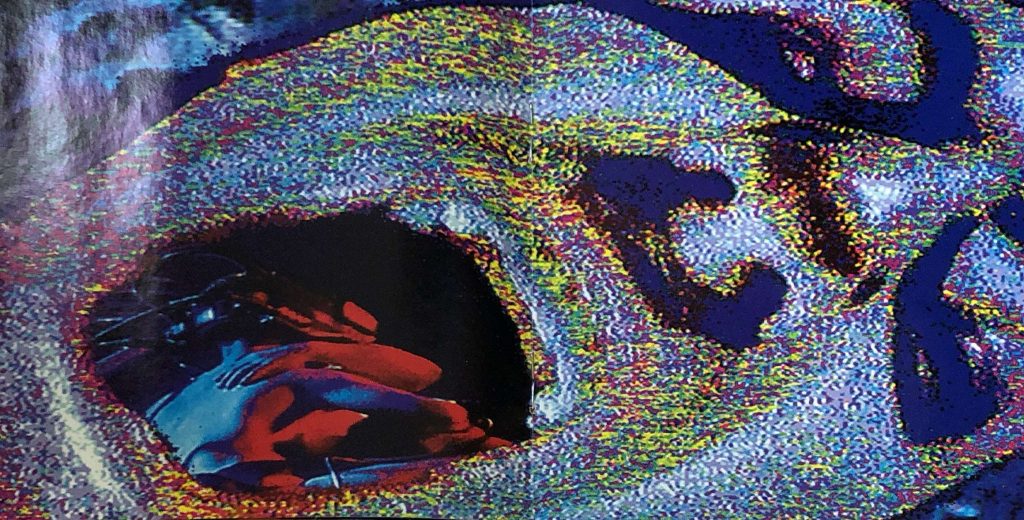
Some of the band even recorded background music for the audiobook version of “Neuromancer.” Use of synthesizers in everything from techno to industrial music (Nine Inch Nails, et al) have similar influences.
They are also prophetic.
That’s why we need to talk about them here, on a blog for the workplace.
Gibson and those who followed wrote about technology (the cyber) and radical social changes (the punk).
They imagined a near future where governments are inept, corporations are corrupt and humanity is just a scattering of rats in a technological maze. There are no good guys, and alienation abounds.
Cheery, huh?
Or maybe a little too close to the modern era’s mark?
Have you noticed how easily we each retreat into personalized technology?
When I was young, my parents were concerned that I could put on earphones and tune out the real world around me.
Nowadays, we can all tune out the real world, in microbursts of immersion and interaction, literally every minute of the day.
Check your smartphone for your usage. How many hours a day do we each spend on them?
Dealing with MacPhisto
The real world can be harsh. I’ve taught Sunday school to teens for about 15 years now. Imagine what it’s like to be a modern teen, alone in the dark, half-drunk with lack of sleep at 2 a.m., surfing your “friends’” highlight reels: perfect skin, perfect relationships, perfect experiences.
Peer pressure is now constant (even in the middle of the night) and visual (which is more powerful—more on that later). I have sensed an increase in both anxiety and boredom over the decades.

A year-plus of virtual living has made it worse: Schools report that violent and antisocial behavior has increased, including in districts that are well off. It’s not a money issue. It’s a culture issue.
U2’s Zoo TV tour described that culture. One of the original multimedia spectacles, the 1992-1993 tour was the birthplace of the cyberpunk-influenced Zooropa album.
The stage featured live television broadcasts. Bono would flip through channels of news and entertainment and violence and diversions. And he would make prank phone calls to world leaders and religious figures. It was sensory overload, and it was hard to separate truth from fiction or opinion.
Bono would take to the stage as characters, including a televangelist and Mr. MacPhisto, a devilish, aging rockstar. He would say diabolical things, taking credit for despots and war and propaganda: “People of Sarajevo, count your blessings. There are those all over the world who have food, heat and security, but they’re not on TV like you are.”
And the crowd would cheer.
“Look what you’ve done to me,” MacPhisto would say. “You’ve made me very famous, and I thank you.”
How often did the crowd get the joke? They seemed swept away in a celebrity experience so completely immersive in sound and vision.
U2 is just an example of how cyberpunk ideas began to play out in the real world. It was a prediction that, technologically, we would all be connected internationally. But that same media would manipulate us.
What to expect
Stephenson’s world in his breakthrough novel “Snow Crash” takes this to an extreme even Zoo TV didn’t imagine. His characters access the Metaverse yet live in franchised racial/political enclaves. Swayed by the media’s seductive images, they are people stripped of dignity and used as information.
In the story, someone is out to infect humans with a drug/virus that “reboots” the brain to humanity’s original operating system (the ancient Sumerian language, it turns out) and controls it (through the virus known by its ancient name, the goddess Asherah). Infections happen through pornographic messages sent through the Metaverse.
Sounds ridiculous? Well, some take Stephenson very seriously. He directly inspired Facebook—er, Meta, as it builds its services around Oculus VR goggles. Amazon founder Jeff Bezos employed Stephenson at Blue Origin. And it doesn’t take long to see how various VR platforms are actively exploring becoming a metaverse—the aforementioned sale of virtual creations, and virtual concerts within the game world of Fortnite, for instance.
Even the Sumerian angle isn’t all that ridiculous:
A quick search of the Bible for the name “Asherah” gives you an idea of how often Israel, God’s chosen people, fell away from devotion to the invisible God towards a pornographic image that made promises: This alluring, nude goddess has power over fertility—crops and childbirth and more. Manipulate her to get what you want.
It’s why God declared to his people in the Ten Commandments: No graven images. They seduce you away to a false version of reality. Israel fell to idolatry again and again, and it eventually led to its downfall.
Insidious
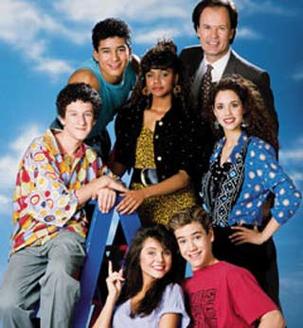
Here’s a silly example of the idol principle: Teen videos, from John Hughes films to Saved by the Bell to “High School Musical,” aim at an audience of minors. Most of those kids and teens know the stories and ideas are pretend.
But they don’t have their guard up to protect them from the assumptions built into the stories about how real life works.
The nerd stock characters wear thick glasses and pocket protectors—yet are portrayed by beautiful actors. The main characters are minors living with parents—yet seem to have complete freedom to be with their friends at all hours. They are teens living with parents—and have serious relationships.
The problem is that the visuals are just too strong, too implicit and insidious, for teens to put up a proper argument. They don’t even realize how it has sucked them in to the story’s worldview. So they adjust their lives accordingly … or, as we continue to see, suffer depression and more as they compare themselves to unrealistic expectations.
That seduction and manipulation applies to grownups, too. The filmmaker Wim Wenders (a friend of U2) calls it “the disease of images.”
How much worse will the disease be if those seductions and manipulations happen through completely immersive visuals and sound? What if it starts to include touch, as well? The pornographers are working on that: What if Meta’s feeling glove were a body suit?
But that’s the easy drug to avoid. More insidious will be that everyone else is out to own your attention, too.
More on that, and what to do about it, next time: “AR and VR: What to do about it.”