
I, like you, have witnessed bad customer behavior during the pandemic.
Just this week, I heard a 10-minute phone call where a customer threatened to bring a gun to my client’s establishment and perhaps some gang members.
I, like you, have found myself saying, “I’m just going to control what I can control.” We can’t control rogue customers throwing fits.
But:
For every article talking about customer tantrums (see today’s Wall Street Journal), I get a story about positive customer responses to employee behavior.
From a client:
Shout out to [name withheld] who spent a lengthy but valuable time with a customer today that resulted in almost a 1,000 sale [six pairs of shoes and two insoles!]!
And this lady left happy and excited for her new shoes.
I happen to know “[name withheld].” She was less than a week on the job.
She received some advice when hired that I’d like to share here: Trust the process.
Trust the process.
That’s what we are responsible for, I think.
You wouldn’t go to a doctor who skipped spending time diagnosing before prescribing pills.
You would go to a mechanic who just started ripping out parts and putting on expensive new ones.
You wouldn’t hire a builder who fast-forwarded past pouring the foundation.
You wouldn’t retain an ad agency that avoided market research.
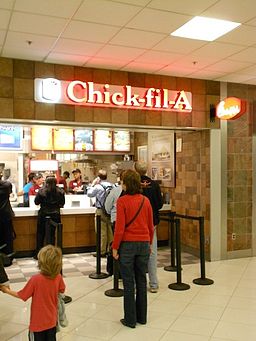
And the same goes for retail establishments. You wouldn’t go to a place that continually gets your order wrong, forgets to ask if you want drinks or what have you.
Chick-fil-A has been rightfully lauded for their customer service. It’s because they trust their hiring process (finding the Three Cs), their onboarding process (see this video for an example), their food preparation process, their ordering process and so on.
I bet they have a customer recovery process for the rare occasions when a customer throws a fit.
In the car business, we talk about “green peas.” Those are brand-new employees who, in a sense, don’t know any better than to follow the process. They do what managers ask.
And they sell as a result.
Green peas eventually come to a point where they do know something. It is at this point they often face a crossroads. They might think, “I don’t think this customer is interested in buying … I’ll skip the demo drive so I can be done here and move on to the next customer that might actually buy.“
It’s a death sentence. Every dealership I’ve ever called on has a story about a customer they brushed off, where they deviated from the process–and paid the price. One dealership I know about missed out on an entire tractor trailer of sales as a result of once such instance.
Your organization or profession surely has a process–customer service, sales, etc.–you can follow. Don’t fall for the temptation to skip steps.