
Let me make a prediction:
You are busy.
This isn’t something I could say with 100-percent certainty in the past. But at some point in the 1900s, it became true of virtually all of us.
It’s so true that FranklinCovey makes a lot of money offering The 4 Disciplines of Execution to people and organizations constantly under threat from what they call the “whirlwind.”
The whirlwind is the day job. All those urgent tasks keeping you from devoting time and energy to important changes you want to make for the future.

You have probably heard that Mike Tyson said, “Everybody has a plan until they get punched in the mouth.”
It’s something like that. You are going to have to react to a lot each day. When you are reactive, you can’t be proactive.
But why? Why is there so much “punching” us?
I’ve written here before about Alexis de Tocqueville’s stunning “Democracy in America.” A French, aristocratic lawyer, he came to the USA in the 1830s, study us. He then wrote perhaps the best encapsulation about what makes America great. He understood employee engagement, the honor in labor and our downright heroic ability to take risks in business.
But he also saw the flaws in democracy.
If you see each of your tasks and goals as a priority, nothing is really important to you.
He noticed that democracy has allowed “equality of conditions.” We all have the God-given right to the pursuit of happiness. So we pursue it. Often to extremes:
The possibilities open to greed are endlessly breathtaking, and the human mind, constantly distracted from the pleasures of the imagination and the works of the intellect, is engaged solely by the pursuit of wealth.
This caused a profound “restlessness” that he did not see elsewhere around the globe. The United States “has something not found anywhere else: everybody in the country is engaged in both commerce and industry.”
Money ain’t evil. But the love of it can be.
You do not have priorities.
My kids and I are learning Latin. Our native language is Germanic: English comes from the Angles, one of those Germanic tribes that took down Roman Britain.
Despite the Angles giving us English, it’s the conquered Romans who gave us most of our vocabulary. More than 60 percent of all English words derive from Latin. That percentage rises dramatically the more syllables the words have.
So it should come as no surprise that “priorities” comes from Latin. But there has been a corruption.
The original Latin word meant “front” or “first.”
In the 1900s–you know, when we all got a lot busier–the word first made its appearance in the plural form.
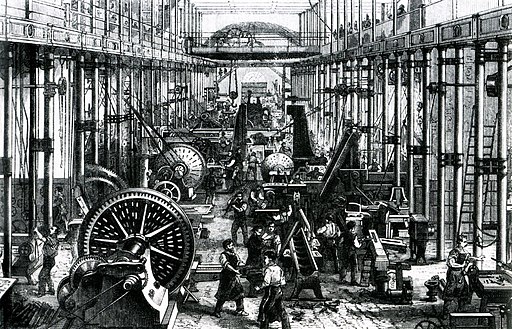
So a word that meant “the first thing,” “the most important” … suddenly became “the first things.”
How can there be more than one thing that is first?
This is essentially the scheme of the villain in the Pixar film “The Incredibles.” He aims to sell machines to everyone so they can have super powers too. Why?
“When everyone’s super … no one will be.”
If you see each of your tasks and goals as a priority, nothing is really important to you.
The real irony
You cannot decide what is most important unless you stop to decide what is most important.
That truth, like God endowing us with the right to pursue happiness, is self-evident.
So why don’t we take time to do it?
Tocqueville again has the answer:
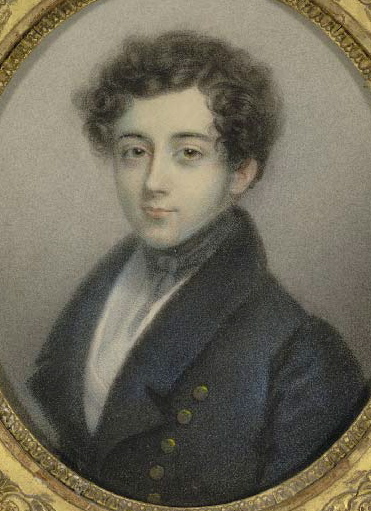
Men who live in ages of equality have much curiosity and little leisure. Their lives are so practical, so complicated, so agitated, and so active that little time remains for them to think.
He says a hallmark of our era “is a taste for easy successes and instant gratification.” Most are “bursting with an ambition which, while keen, is also lackadaisical. They want to achieve great success instantaneously but without great effort.”
He saw this in the 1830s–imagine what he’d think now!
We all want the quick fix. A viral nugget shared on LinkedIn. A meme that incapsulates our desire to hustle. The video series that is going to fix our bad habit.
Unfortunately, they don’t work. What really works is dialogue.
Conversing with others … or yourself
Our podcast recently started a series on how to have difficult conversations that are high-stakes and high-emotion. The key is to remain in dialogue.
We often talk about the ancients’ use of what they called the art of dialectic, that conversational wrestling to the real truth of a matter.
And we spend a lot of time coaching or training others to coach.
In all three cases, what we are talking about is slowing down in order to think through what’s really important–and, once you have that insight, what needs to be done.
I do not think there is a shortcut to this. You have to put in the work. You have to have conversations with others or even with yourself.
I’m grateful to my clients who allow me a ringside view of this playing out. They invest time and money. And they end up with awareness and action.
Recently a client said that he had a “rough idea” of where he wanted to go. After a few months of talking, that turned into a “clear vision” that he was able to bring to life. He said he reached new levels in his career that he didn’t think possible.
So clarity–a clear vision–led to progress–new levels in his career. Awareness and action.
But you have to slow down and have the conversation to get there.
The ancients called it schole. It’s the Greek word that gave us “school.”
But it also meant “leisure.”
Rest. Inaction. Pausing to reflect instead of do.
Look around you at what the ancients built. Western civilization wouldn’t have happened without these pauses.
If you don’t stop to think, you can’t make progress either.
If all this talk of French aristocrats and Latin words is too much for you, let’s end with a saying popular in NASCAR.
Slow down to speed up.
My prayers are with you as you attempt to do this. Your ancestors may have had more time, but maybe you need a coach.